Complementary intervention
It complements other intervention processes, without replacing them.
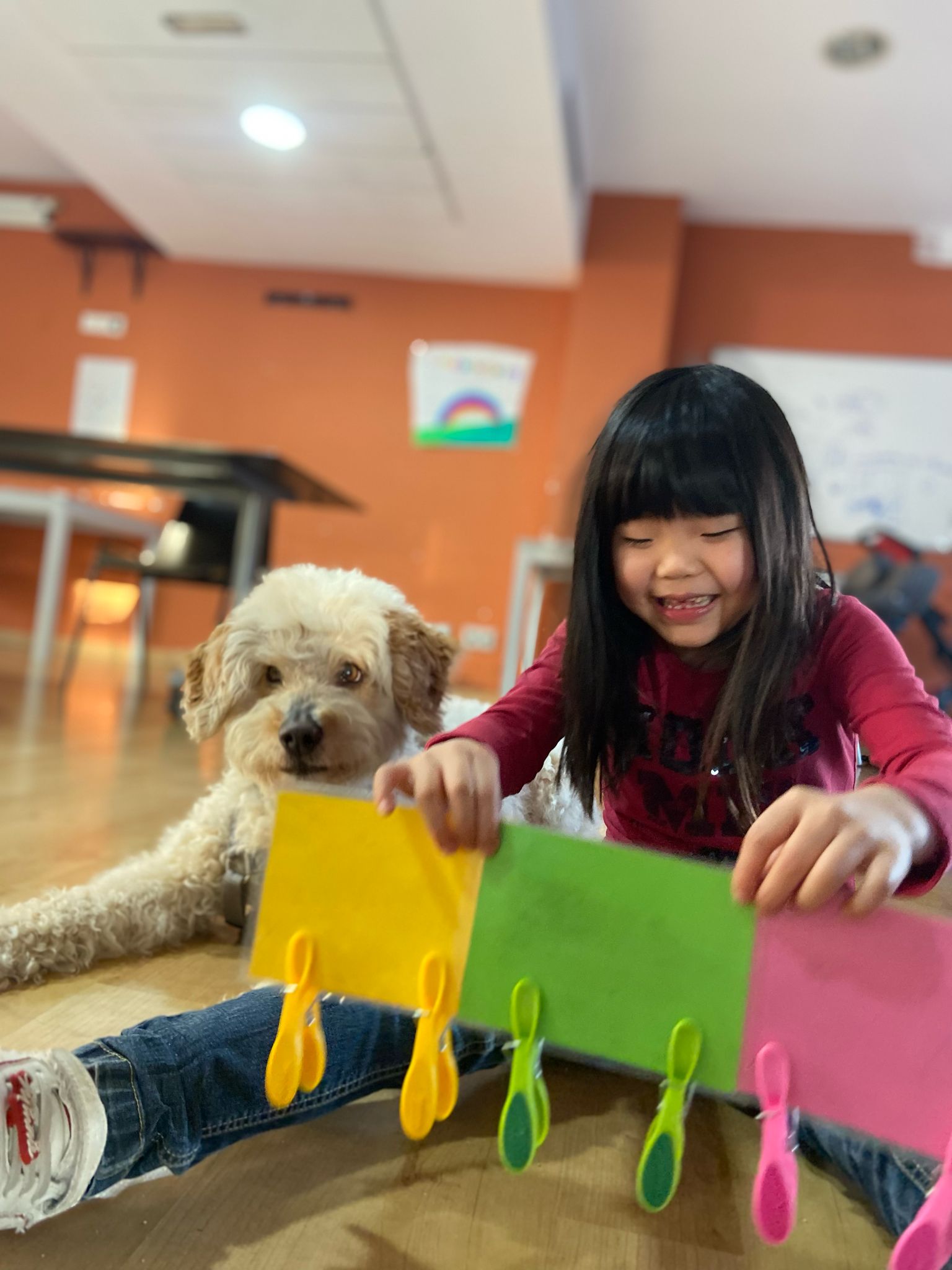
Every intervention has a purpose. Every person, their needs. And every dog, their characteristics.
Every intervention has a purpose. Every person, their needs. And every dog, their characteristics.
These are professional interventions that incorporate the dog as part of the process, making use of the interaction between the person and the animal to work on different objectives and promote wellbeing.
Each intervention is adapted to the person's needs and to the context in which it takes place, in collaboration with the professionals involved.
The dog also needs to be prepared to take part in this type of intervention. Their training, characteristics and capabilities, as well as their wellbeing, are essential aspects to take into account.
It complements other intervention processes, without replacing them.
Interventions guided by professionals trained in AAI.
Concrete, shared goals.
We adapt their participation to their traits and wellbeing.
We develop different intervention modalities, adapted to the needs of each person, the goals of the project and the context in which it takes place.
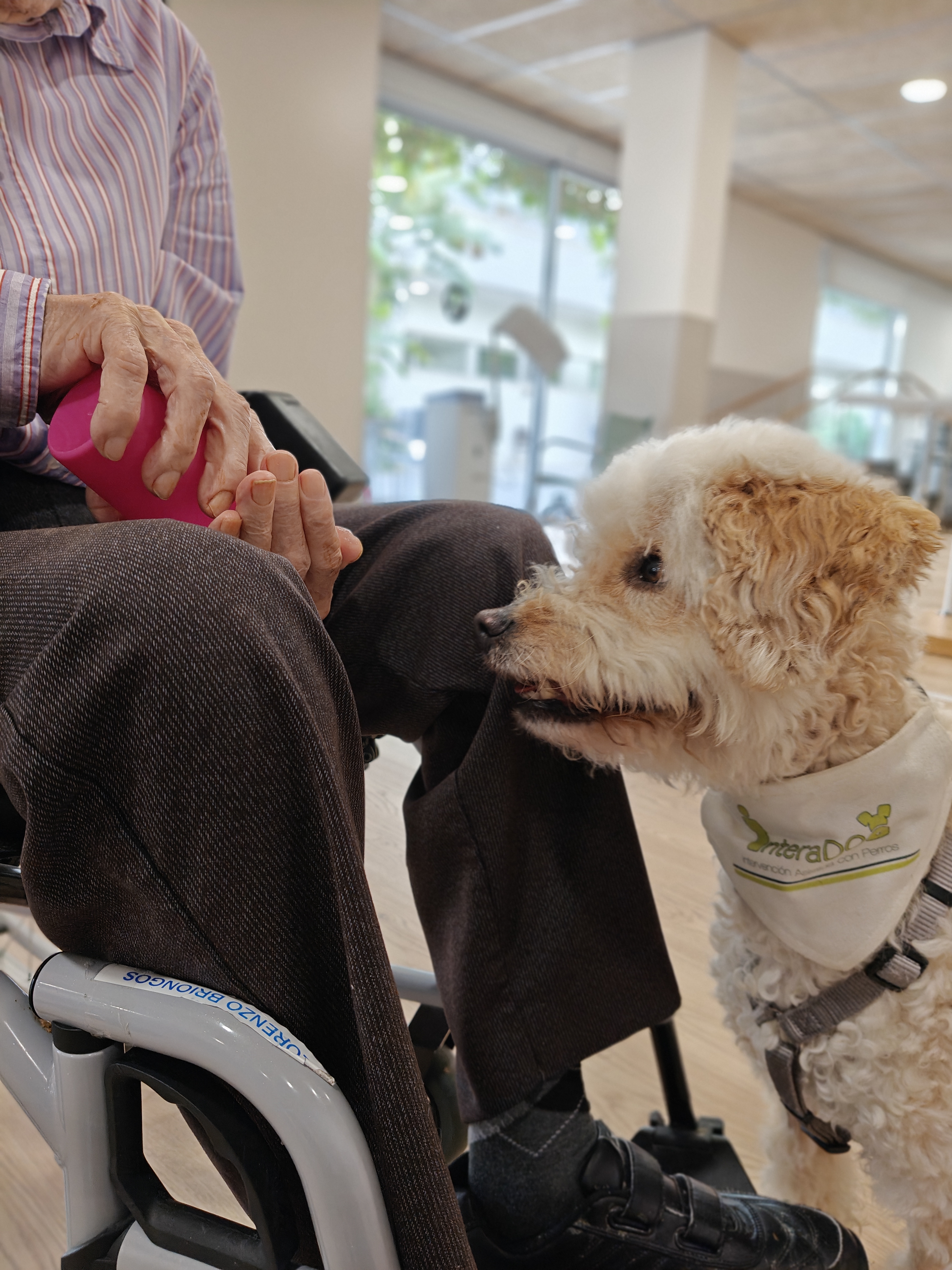
Interventions aimed at therapeutic goals, carried out together with professionals such as psychologists, physiotherapists, occupational therapists or speech therapists, always respecting each person's pace and process.
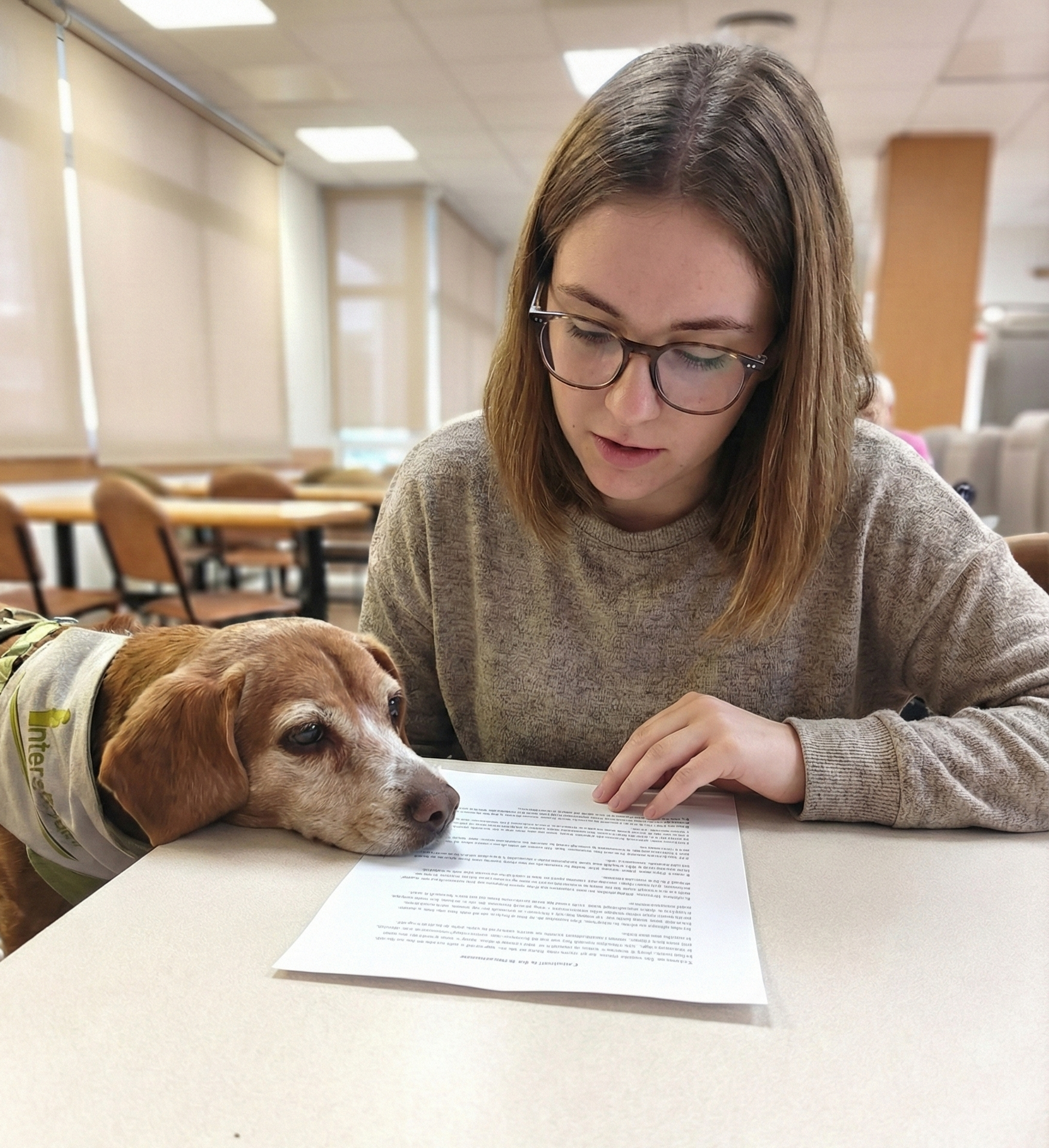
Interventions that incorporate the dog into learning and development processes, in collaboration with professionals in education, pedagogy and educational psychology, respecting each person's learning pace and individual development.
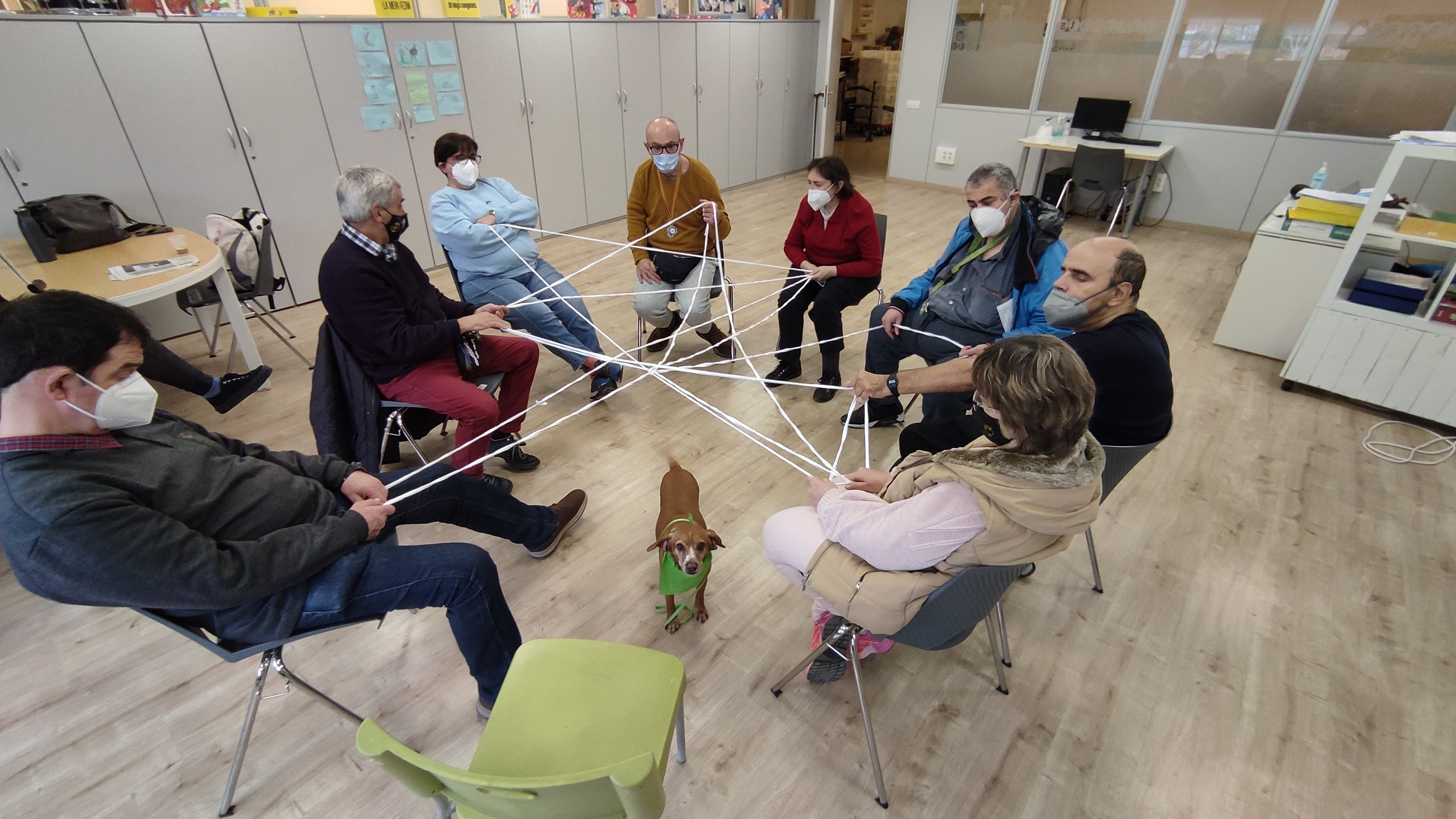
Interventions aimed at supporting accompaniment, participation, autonomy and social inclusion, working together with professionals from the social and community sector and taking into account each person's life history and personal reality.
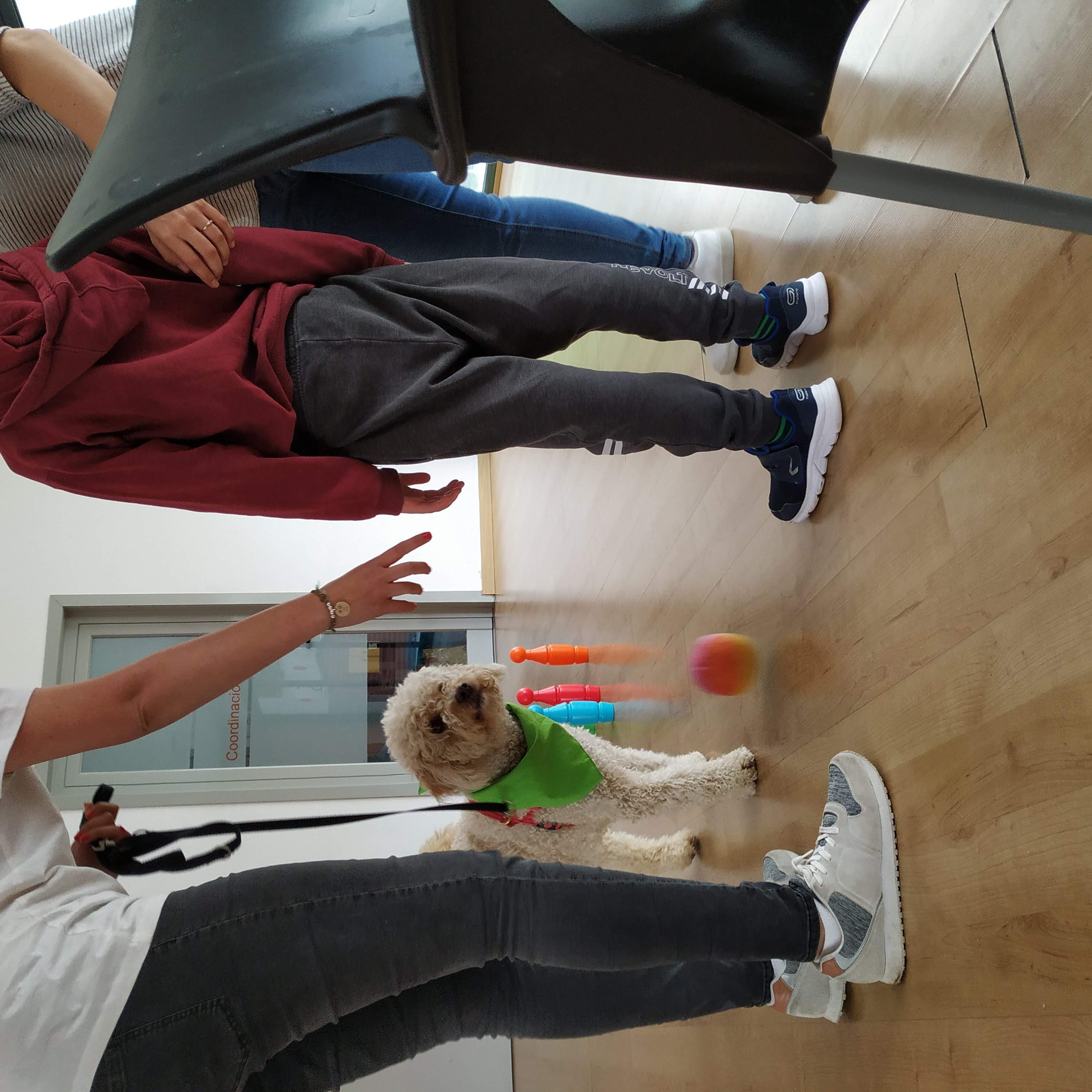
Activities that use interaction with the dog to promote wellbeing, participation and positive experiences, through motivating and playful dynamics adapted to the goals of each project.
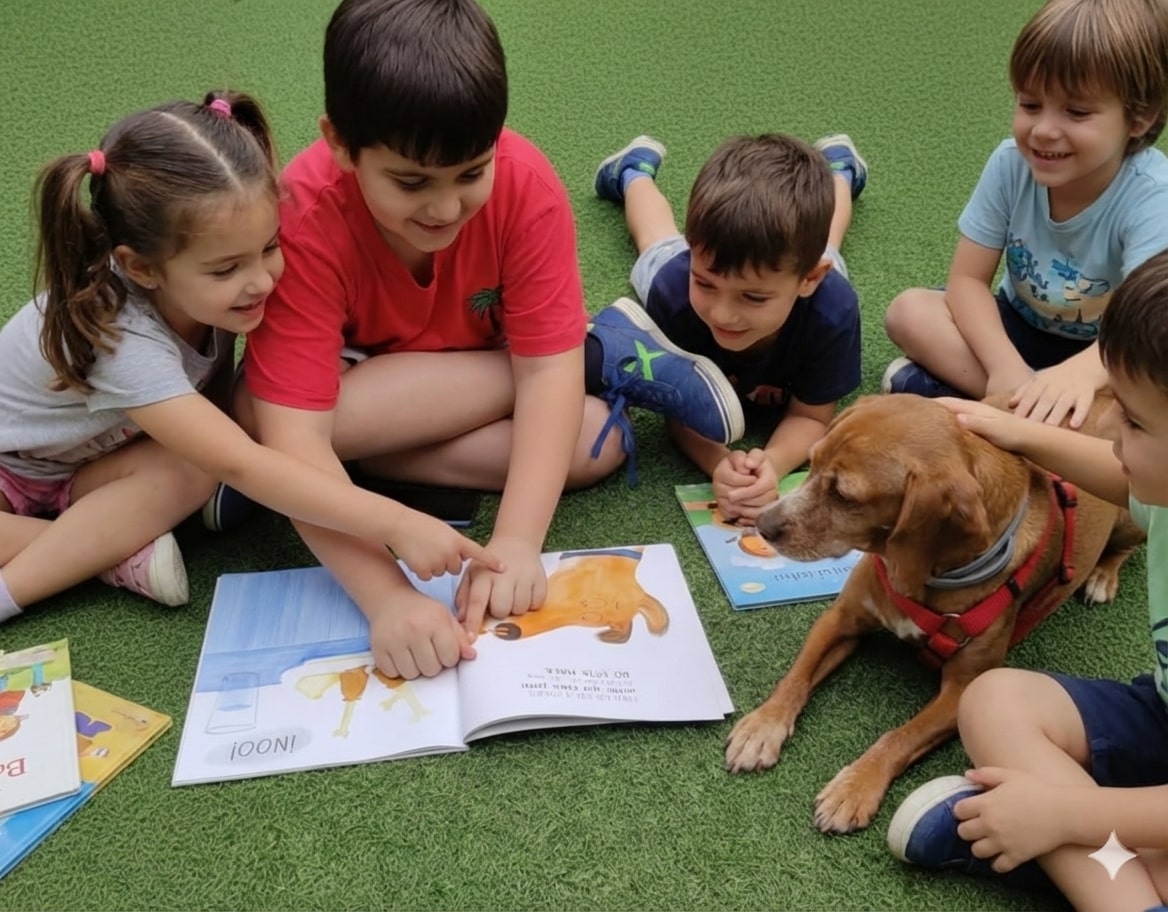
Interventions that incorporate the dog into reading and learning processes, in collaboration with education professionals and other stakeholders, creating an environment of trust and motivation adapted to each person.
DAI can contribute to different areas of development and wellbeing. Its contribution depends on the goals of each intervention, the needs of the person and the context in which it takes place.
Each intervention starts from the person's needs, the project's goals and the dog's characteristics.
We gather the necessary information together with the person, their family and the professionals involved.
We define goals, activities and the dog's form of participation according to each project.
We carry out the intervention, adapting to the person's progress and the needs of the moment.
We assess the process and maintain coordination with the people and professionals involved.
We accompany people who can find in their relationship with their dog an opportunity to work on aspects of their daily life, coexistence and participation.


Our human team has a multidisciplinary academic background in health, educational and social fields, complemented with certification as Technician and Expert in Animal-Assisted Interventions (AAI). We understand our work as a working partnership, so we also have specialized training in canine education and animal welfare. Additionally, we maintain a commitment to continuous training, constantly updating our knowledge in intervention methodologies and new sector techniques to always offer the highest quality and professional rigor.
Our canine companions have been specifically selected and prepared to accompany us. This is possible because they have an optimal physical and emotional state under strict health and welfare protocols, in addition to having passed character assessments that guarantee a sociable, balanced temperament with adaptability. Finally, they have technical aptitude based on solid canine education, which allows us to work in any environment with total safety and control.
The standard duration of sessions is 45 to 60 minutes, depending on whether the intervention is individual or group. However, our methodology is flexible: we always adapt the work time to specific objectives and the attention capacity of the user, thus ensuring that each session is effective and respects the well-being of both the person and the dog.
We travel to health, educational and social settings (such as hospitals, residences, day centers, schools or occupational workshops), as well as conducting interventions in private homes. To ensure the safety and effectiveness of the session, the space must meet minimum calm and welfare requirements that we assess together before starting the intervention, thus ensuring that the environment is the most appropriate for people and the dog.
Safety is our priority. Our dogs follow a rigorous hygiene protocol before each session (brushing, paw cleaning and general check) and have strict veterinary control. Regarding allergies, it is essential that the center or family inform us in advance of any detected case. For safety, people with diagnosed allergy to dog hair or epithelium will not be able to participate in sessions, unless a medical report is presented that expressly authorizes their participation under the intervention conditions.
We work with different modalities depending on the situation. Contact us to learn about available options.
Contact us and we will explain how we can help you. First informative consultation free.
Contact now